Data tag messages
Insights & Data Tags
In the Kelvin UI, Data Tags are now known as Insights.
Data Tags may be depreciated in the Kelvin SDK and Kelvin API in future releases.
Keep an eye on future releases for updated announcements.
Insights Management
You can also manage your insights using the Kelvin SDK and Kelvin API.
You can read all the details in the Platform Administration in the Insights section.
Data Tag Messages
Insights are used to label Asset time series data. This has many applications such as;
- For data scientists to use for machine learning training
- For developers to have additional information beyond the raw data to review and improve Kelvin SmartApps™
- For Operations to tag events linked to the time series data for historical records
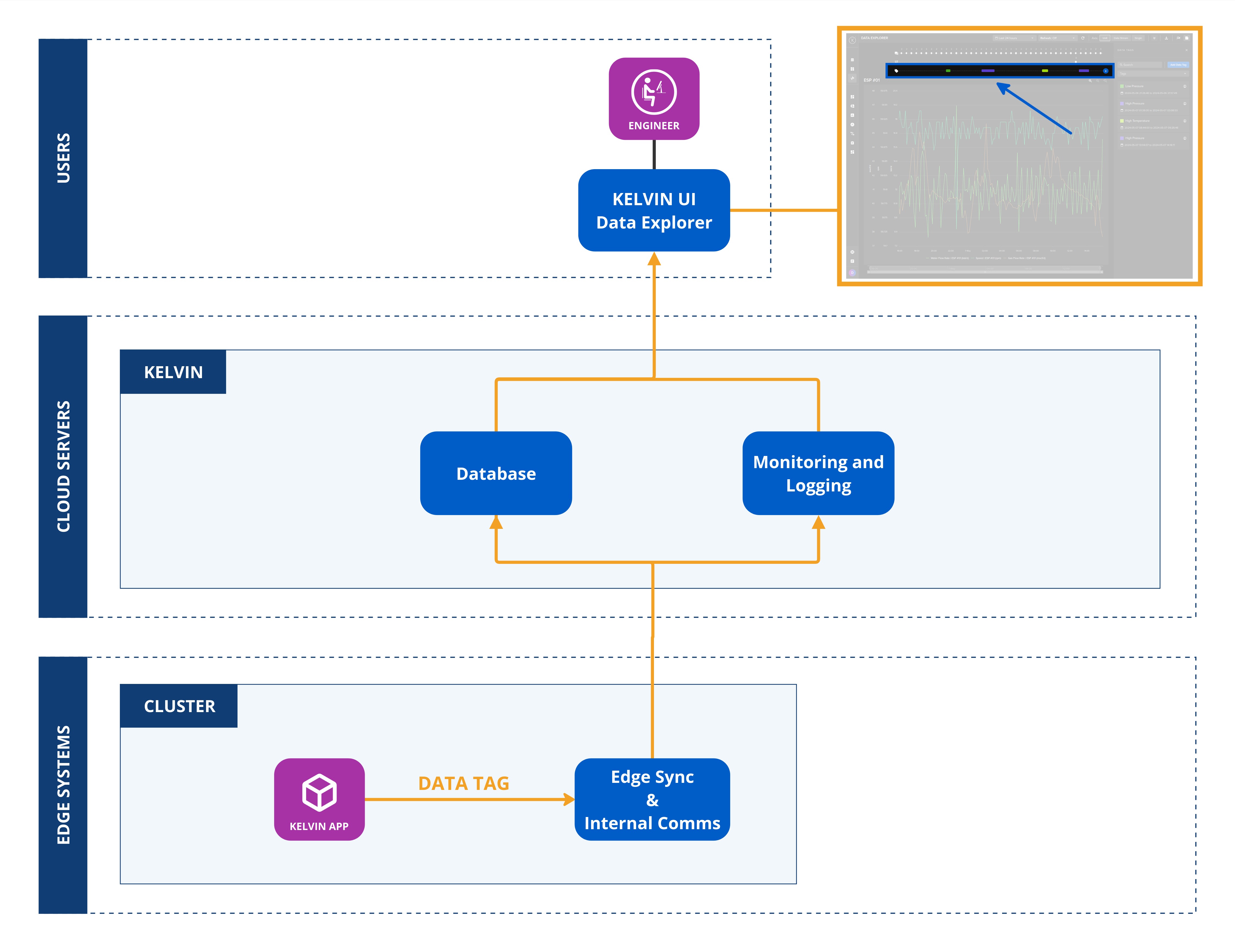
On the Kelvin UI, the insights will show in the Data Explorer.
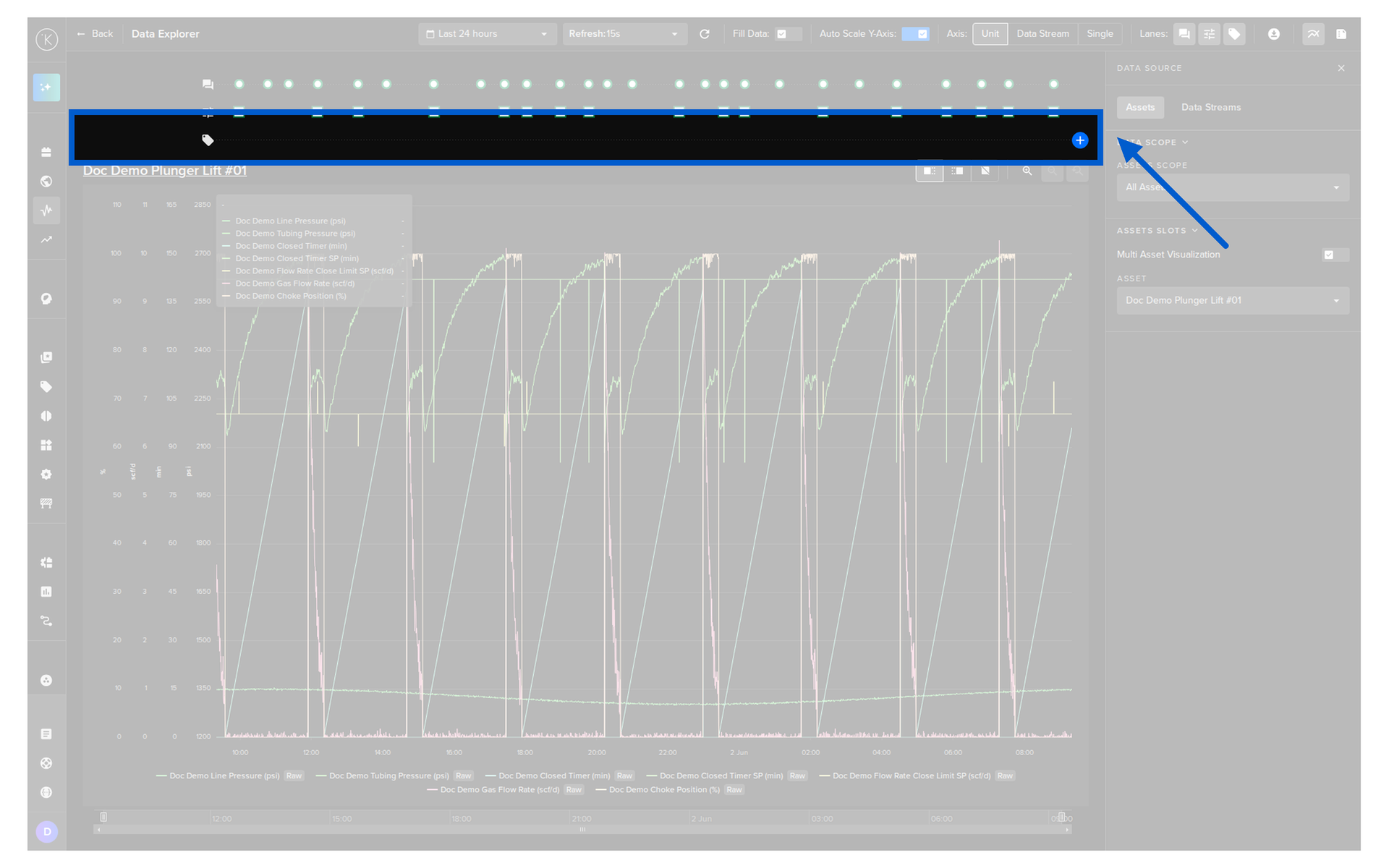
Kelvin SmartApps™ can publish a DataTag Message in order to label important events on a certain point in time (or time range) for a certain Asset.
Note
Operations can also their own add Insights manually through the Kelvin UI
The DataTag Object supports the following attributes:
| Data Tag Attribute | Required | Description |
|---|---|---|
start_date |
required | Start date for the Data Tag. Time is based on UTC timezone, formatted in RFC 3339. |
end_date |
optional | End date for the Data Tag. Time is based on UTC timezone, formatted in RFC 3339. |
tag_name |
required | Tag name to categorize the Data Tag. |
resource |
required | The Asset that this Data Tag is related to. This is in KRN format (e.g. krn:asset:bp_01). |
description |
optional | Detailed description of the Data Tag. |
contexts |
optional | A list of KRNDatastream resources associated with this Data Tag. Each referenced data stream must be declared as an input or output in app.yaml. |
app.yaml setup
To publish insights, declare the tag names your SmartApp will produce in the data_tags.outputs section of your app.yaml. Each entry is the tag name as a string:
Publish a Data Tag
This is how they can be created and published:
contexts restriction
contexts accepts only KRNDatastream instances, and each data stream referenced must be declared as an input or output in the SmartApp's app.yaml.